
Charlotte Edwards, arguably the best woman’s cricketer ever, recalls what it was like in the sport when she started aged just 11.
“I predominantly played boys cricket growing up, there was no woman’s team available to me when I was 10 or 11,” said the former England captain.
Charlotte has been on an incredible journey, from experiencing a lot of sexism in her early days, to being fast-tracked in the women’s game, to become, at the time, the youngest cricketer to play for the woman’s team.

Twenty-five years later, Charlotte is considered one of the best England captains across all sports. She captained England a recorded 220 times, leading them to win three Ashes series, the World Cup and World Twenty20 series titles in 2009.
During the early days of her career, Charlotte encountered a lot of sexism. Not from her teammates, but from their parents and her opponents.
“My teammates were amazing […] I captained all the boys’ teams I played in growing up so yeah, they were very accepting of me,” said Edwards. “I can’t say that was the case for the teams I played against, it was actually quite challenging at times.”
She added: “I actually found the parents worse than the boys I was playing against. The way they looked at me, they sniggered sometimes […] and for a 12-year-old girl turning up at a game not feeling accepted was tough.
“I sometimes dreaded going to games but the only thing that got me through this tricky kind of situation was the fact I was desperate to play cricket and I wanted to be successful playing cricket […] and that kind of got me through.”
In her 20-year career, Charlotte achieved more than 10,000 runs in international cricket and puts her success down to playing boys cricket from a very early age.
She said: “When you come across those kinds of circumstances growing up, it makes or breaks you really and I guess it made me quite tough and I think it prepared me to play international cricket.”
Although, as a 10-year-old she never imagined that she would end up playing for the England woman’s team. “Growing up, I thought that just men played cricket, I didn’t think there was a woman’s cricket team until I was 13.” She said.
“I watched the England women’s win the World Cup at Lourdes in 1993 and that was the moment when I thought that I could do this, this is tangible and something I think I can do.”
At aged 16, Charlotte made her England debut against New Zealand and went on to achieve a record of 309 caps. Woman’s cricket was still an amateur sport making it almost unrecognisable in comparison to today’s game.
It took until 2005, when both the men and women’s team won the Ashes, for women’s cricket to get the recognition and respect it deserved. Unfortunately, up until this point, there was a general consensus that women didn’t play cricket or that the standard wasn’t good enough.
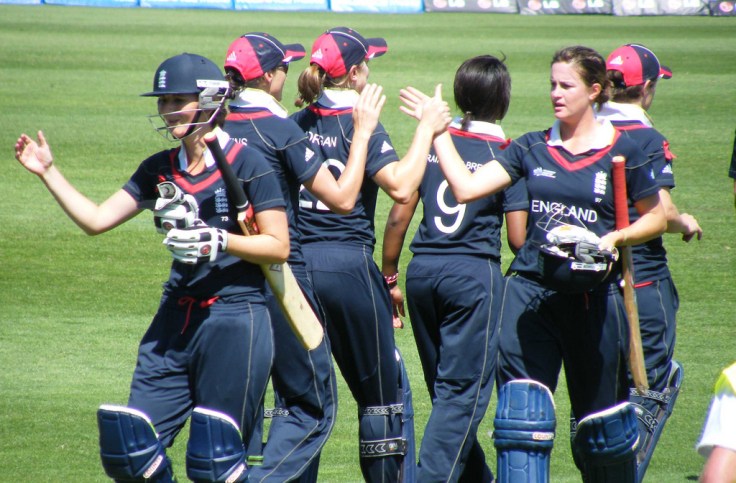
Nowadays, women’s cricket is now more accepted than ever, thanks to increased funding and media coverage. It is now an aspiration for women, a viable career choice, and Charlotte’s success as a player and leader played a large part in that.
But for Charlotte, it makes no difference. It all meant the same, she put her heart and soul into the game, not for money or fame, but for love.
She said: “It didn’t matter if I was being paid a pound or £100,000 it meant just as much to me, it was always my dream to play cricket for England and I guess I was lucky to do that.”
Alongside playing cricket, Charlotte was an ambassador and now a trustee, for an organisation called Chance to Shine, a national charity that aims to give all children the opportunity to play and learn through cricket.
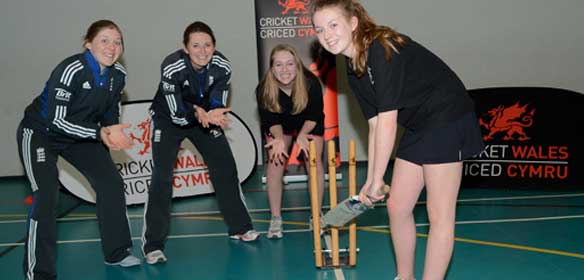
“I jumped at the chance to be involved because cricket had such an impact on my life,” she said. “I wanted to give every girl or boy an opportunity to play cricket in this country.”
Charlotte added: “I worked for them for a number of years […] going into schools delivering assembly’s introducing cricket, certainly to girls as that’s what I’m most passionate about.”
Charlotte uses these opportunities to talk to young girls and explain that choosing cricket is an option for them. That you can have a career in cricket which she could have only dreamt of when she was starting out.
“The most powerful message I can give to a young girl now is that there is a career in cricket […] you can now earn a living out of cricket and it’s certainly the best job in the world.”
If that doesn’t persuade people to start playing cricket, I don’t know what will.
Listen to the full interview below.
 Women United
Leave a comment